

About Us
Is Your Sluice Room Undermining Your Sustainability Objectives?
The NHS is racing towards its Net Zero targets, and hospital sustainability leads are rigorously auditing every ward for energy and water efficiencies. Yet, one of the most resource-heavy areas of clinical care is consistently overlooked: the sluice room.
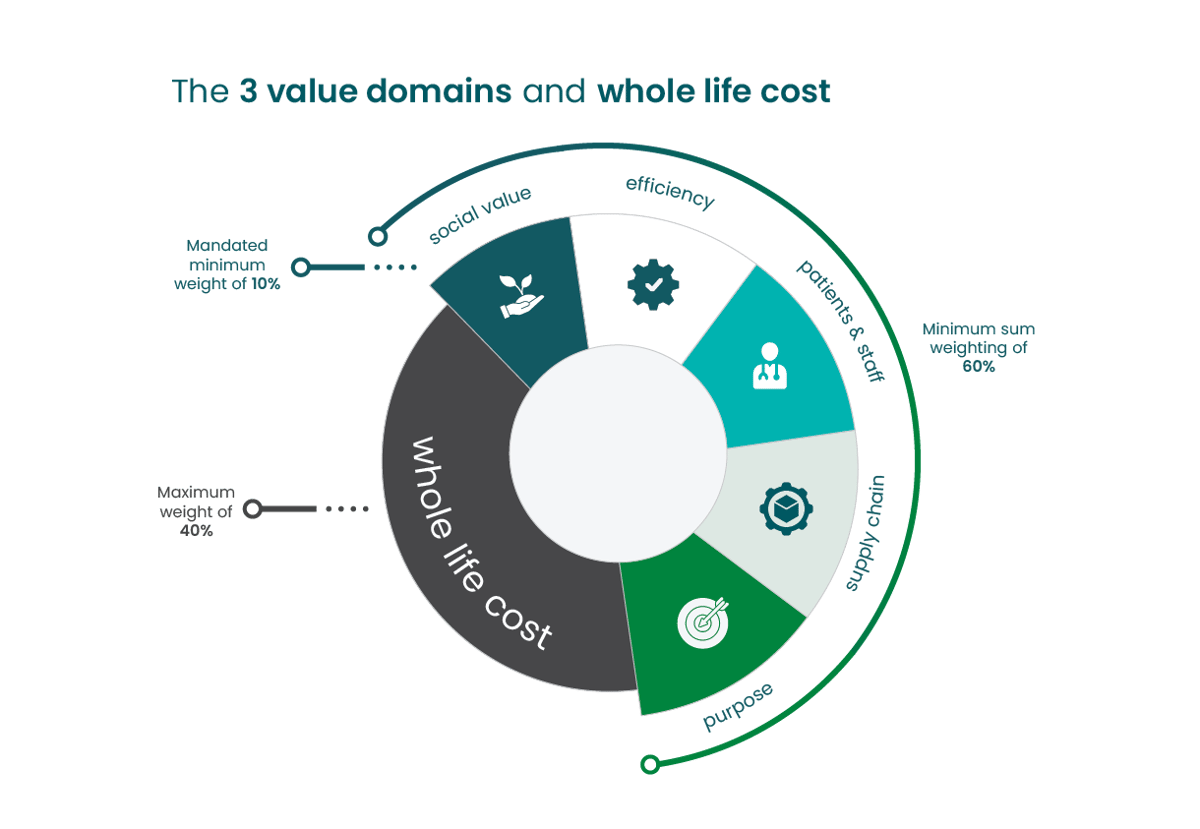
If you are a Director of Sustainability or a Net Zero Lead, you cannot afford to ignore this space. The Department of Health and Social Care (DHSC) has published the new Value-Based Procurement (VBP) national standard guidance for medical technology. This guidance categorically ends the era of buying the cheapest equipment available.
Under the new 60/40 evaluation architecture, Domain 1 focuses entirely on Social Value and mandates a strict minimum weighting of 10%. If your clinical environments are running outdated equipment, you are leaking resources and actively sabotaging your own tender evaluations.
The Brutal Reality of Domain 1 Compliance
The VBP guidance is completely unambiguous. To score an "outstanding" rating in Domain 1, suppliers and buyers must provide specific, measurable, and time-bound commitments to deliver sustainable procurement practices. This aligns directly with the NHS Social Value Playbook and Policy Procurement Note 002 (PPN 002).
Evaluators are looking for method statements that demonstrate a supplier's approach to baselining carbon emissions at the commencement of a contract. They want to see exactly how "green" technologies will be implemented into business-as-usual activities. You cannot win on vague promises. Data is not just a metric; it is the absolute foundation of your procurement strategy.
We care deeply about the numbers, but only when they are evaluated through a strategic lens to secure tender victories and drive operational change.
Upgrading Your Hospital Macerator for Carbon Reduction
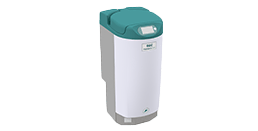
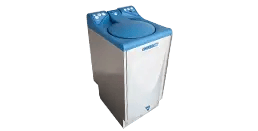
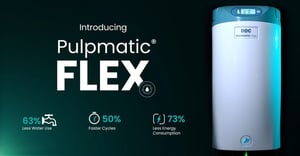
A legacy hospital macerator is a massive drain on your facility. Older models consume excessive amounts of water per cycle and demand high energy loads to break down medical pulp.
By transitioning to modern, aerodynamically designed macerators, you instantly address Outcome 1.1 of the VBP guidance: reduction in contract level carbon emissions.
Advanced macerators use precision engineering to operate on a fraction of the electricity and cold water. When you multiply those daily savings across a 900-bed hospital over a ten-year lifecycle, the carbon emission reductions are staggering. This provides the exact quantitative evidence required by procurement teams to validate your Net Zero roadmap.
[Check the Sluice Room Sustainability Best Practices]
Holistic Hospital Sluice Room Solutions
True sustainability requires looking beyond single machines. Outcome 1.2 of the VBP framework explicitly demands a reduction in packaging. Your strategy must demonstrate collaborative ways of working with the supply chain to influence manufacturing, logistics, and delivery processes to minimise waste.
Comprehensive hospital sluice room solutions achieve this by standardising chemical dosing and utilising hyper-concentrated infection control solutions. This drastically reduces the volume of plastic containers shipped to your site. Furthermore, the guidance asks how you will create and monitor effective guidance to extend the useful lifespan of your equipment. By integrating digital usage protocols and 360° Care maintenance packages, you prevent premature asset disposal and keep heavy machinery out of landfills.